A mini review of The Fellowship: the Literary Lives of the Inklings: J.R.R. Tolkien, C. S. Lewis, Owen Barfield, Charles Williams; by Philip and Carol Zaleski.
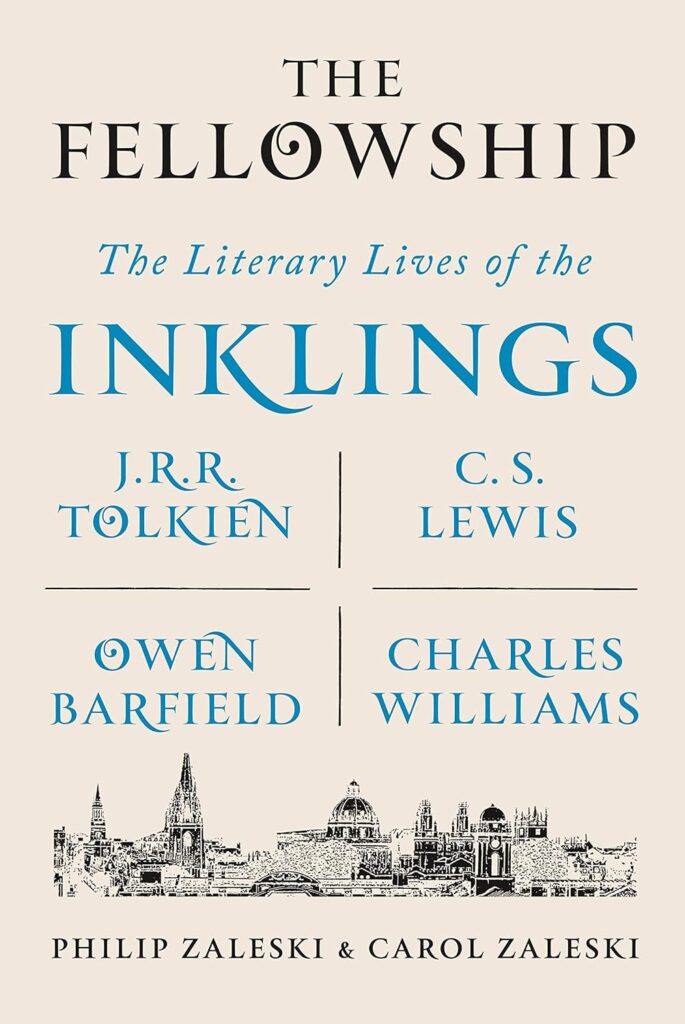
The Fellowship is a fairly thorough biography of four exceptional members of a group who called themselves the “Inklings.” The Inklings was an exclusively male gathering of 20th century “Christian thinkers and writers” in Oxford, England.
Authors Zaleski & Zaleski alternate telling the stories of Tolkien, Lewis, Barfield, and Owens. What exactly were these men like?
First, J.R.R. Tolkien, a Roman Catholic, was the only man with a happy home life and family. Owen Barfield spent his life passionately writing and preaching about anthroposophy, a fringe belief about how we can use our intellects to contact the supernatural world. (I looked anthroposophy up in a dictionary as soon as it was mentioned, and I’m still confused.) Williams, on the other hand, dabbled in occultism. He also had a secret life of flirting with and/or behaving deviantly and sadistically with a number of young women. The famous Anglican author of Mere Christianity, Lewis himself, had a very strange relationship with his housemate, the much-older Mrs. Moore. Lewis’s beloved brother, Warnie, struggled constantly with addiction to alcohol.
In other words, don’t read this book to be inspired by the great and moral lives of the most famous of the Inklings. Do read it, however, to gain fresh perspective on the writings of any of these brilliant men. Tolkien’s masterworks appear even greater when one appreciates the years of his life that went into thinking about, developing, and refining Middle Earth as not just a fictional and flat location but as an entire world with its own myths and languages. Lewis’s works build on one another. The Fellowship reveals the degree to which Lewis’s friendships with other men of genius and scholarship challenged and inspired him.
The Best of the Fellowship: Everyman
One of my favorite parts about this book was seeing how Lewis and Tolkien both appreciated the common, humble Everyman and aspired to be this man. Lewis called himself the “mere Christian,” the ordinary layman. He succeeded in reaching a generation with his approachable, humble style of apologetics. Tolkien extolled not the great wizards such as Saruman but the simple, happy hobbits, with their delight in multiple daily meals and smoke rings. Both men had intellects far beyond the actual Everyman, and could never quite fit in with the crowd. Yet, both also strived for Christlike humility.
I love the fiction of both Lewis and Tolkien. And I think I better understand them both after reading The Fellowship. I recommend the book if you have some time for a deep dive into some very complex personalities.
For more short-and-sweet book reviews, check out this page on my website.